
The most fun part about chickens is picking out the breeds. Most baby chicks will all look the same with a few variation of coloring adults turn into all shapes and sizes. Adults, however, come in a crazy amount of different colors, shapes, and sizes. Let’s dive a bit into the chicken world and see what all we can sort out!
We had already picked out our coop (which I’ll write about here next week, because a crazy amount of research and effort went into picking out that behemoth haha) so we knew we had roughly enough space for 10-12 adult birds. Most breeds of chickens come in standard sizes: Bantams or Regular. There are also some freakishly huge birds which fall into a category of their own called Brahmas. These care comically huge, as you can see from this Jersey Giant below:

Bantams are like mini or micro chickens. They will have many of the standard qualities of the original breed but are bred to be smaller in size. The pros to this is you can fit more birds into a smaller place, and it works better for folks in town where space is limited. The downside is a smaller bird equates to a smaller egg. Which is fine for a small backyard breeder, but can be troublesome if you want to sell eggs as in some bantams it can take up to five bantam eggs to equal one regular sized chicken egg.
We have 8.5 acres of land currently, and have a rather McMansion sized coop, so we are going to opt for the regular sized breeds. These breeds can range from 5 to 10 lbs. We wanted to pick out a breed that were similarly sized as chickens can easily pick on birds that are too small compared to the rest of the flock. So we decided on the average 6-8 lb range.
There are many breeds that can be considered dual purpose breeds, which means you can use them for either egg production or meat birds. A chicken typically is only most productive during her first two years of laying, despite having a 8-10 year lifespan for most breeds. Some chicken owners, will use these two years to collect eggs and then butcher the dual purpose breeds for meat and refresh their stock. We decided, we were not interested with meat or all the gory details that go into getting said meat, so we were going to pick our breeds based on the following criteria:
- Cold Hardness – Iowa winters SUCK. In the summer there are many ways and activities you can do to keep your birds warm, but in the winter there’s only so much you can do to prevent them from freezing before you’re having to bring them into a garage or basement to prevent frostbite.
- Egg Production – We wanted good to awesome egg protection as we would only have 10 birds. Having breeds that lay close to the average of one egg a day, would ensure we would have enough eggs to supply our friends/family/ourselves with fresh farm eggs!
- Egg Color – Yeah, I’m a sucker for the fun colors chicken’s can produce. Egg colors range from browns and whites of all shades, to fun colors like greens and blues. We pretty much wanted anything but your boring white store bought colors!
With this in mind, we set to research a bunch of breeds that Murry McMurray sold, and pick which options were the best for us. Here is what we came up with. We placed an initial order, but we’re not guaranteed there will be enough chicks hatched to fill it. So for our backup chicks, in case we’re short on any, we have planned to back fill any of the breeds below:
Ameraucana (2 chicks):

These bird are a bit lighter (4-5 lbs) and come in a crazy amount of colors. They are known for having adorable poofy cheeks! They are bred to lay eggs from a turquoise to darker blue egg and typically lay 4-6 eggs per week.. They are also very cold hardy as they have a very small comb (top part of their head) which is less susceptible to frostbite.
Black Star (1 Chick) &
Red Star (2 chicks):

Black Star
Credit:
https://www.mcmurrayhatchery.com
Red Star
Credit:
https://www.mcmurrayhatchery.com
These 6 lbs birds are what are known as sex-linked chicks which means from birth the chicks will be easily identifiable as either male or female based on their feather/color patterns. They are hybrids created by crossing a barred breed and a non-barred breed. Stars are typically from a non-barred rooster (like a Rhode Island Red) and a barred hen (like a Barred Rock for Black Stars or a White Rock for Red Stars). The chicks produced, for this generation only, will have a easily distinguished color pattern allowing easy sorting of males and females (side note: Genetics are AWESOME!). These ladies will be high production hens, laying 5-7 brown colored eggs per week.
Cuckoo Marans (2 chicks):

https://www.cacklehatchery.com
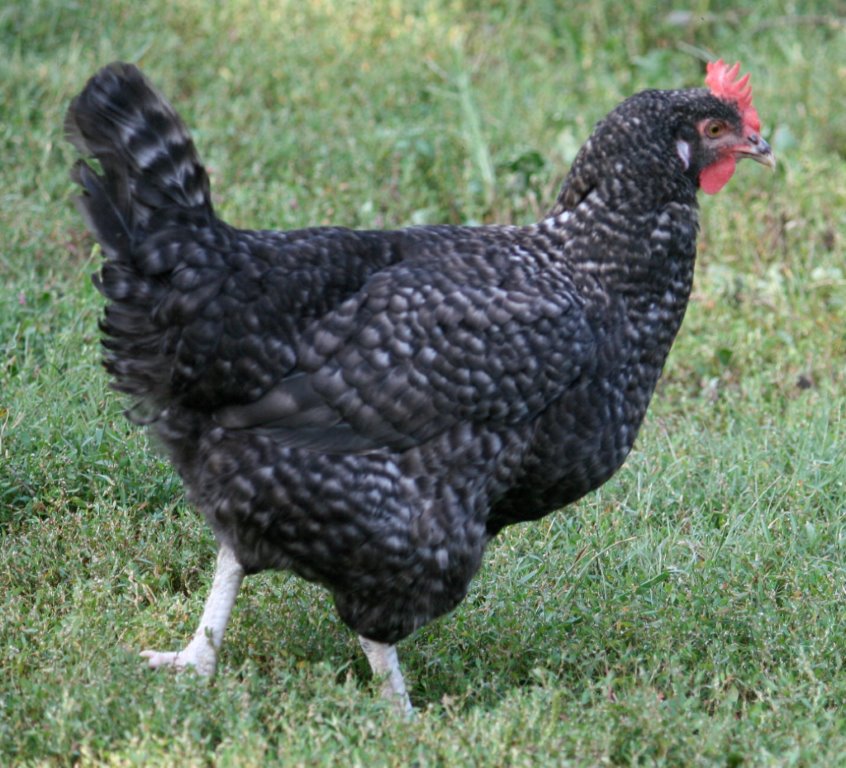
This chickens around 6 lbs each and are known for their ability to lay an extremely dark brown chocolate colored egg, some even end up speckled. Crazily, you can actually scrub the color off these eggs. Fun fact, white, blue, and green eggs are colored through the entire shell (meaning the inside color matches the outside) yet brown eggs are only shaded on the outside of the shell and the inside will still be white. These hens will lay awesome large eggs 5-7 days a week!
Dominique (1 chick):

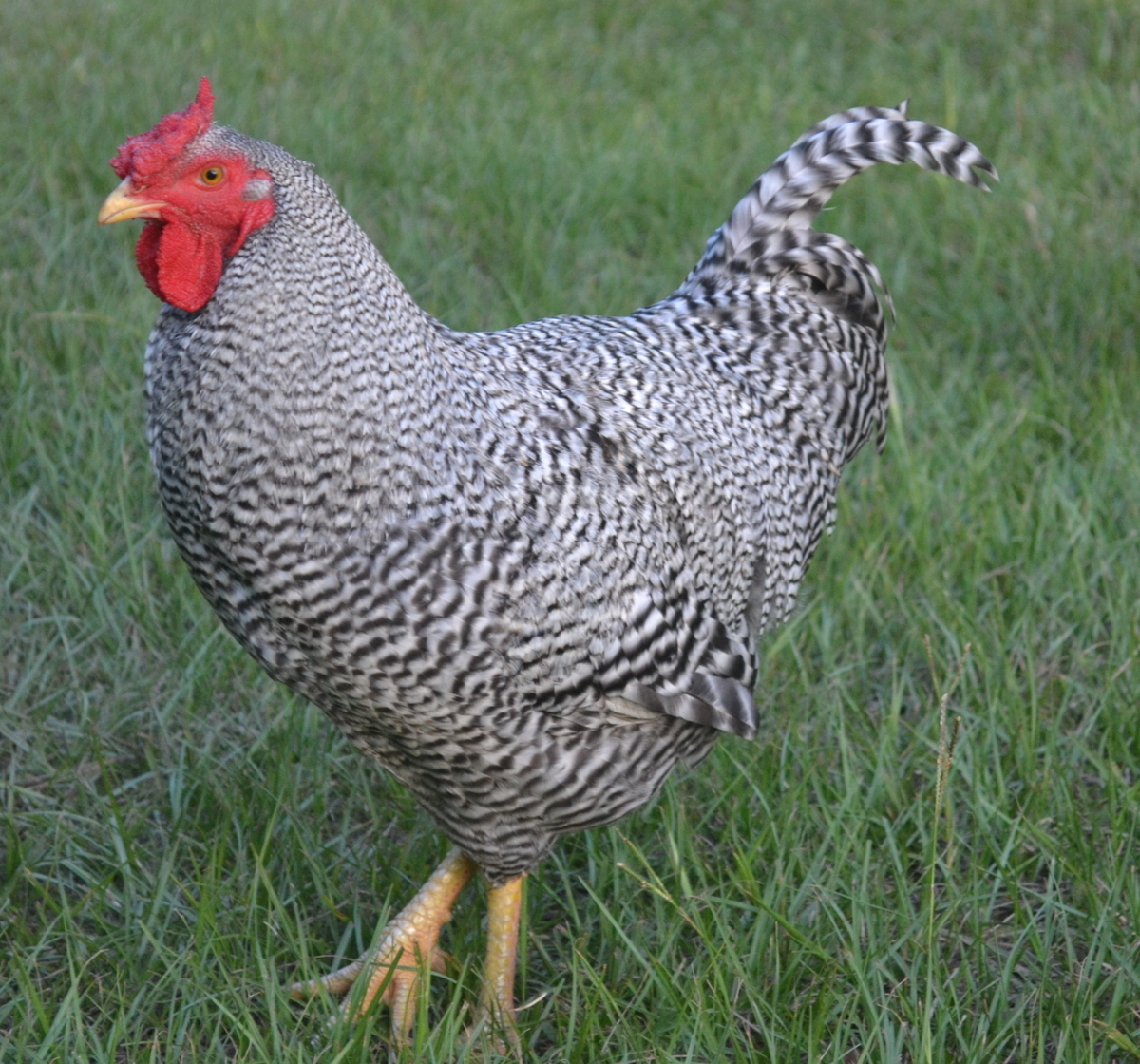
These ladies are around 5 lbs and lay approximately 4-6 eggs per week. They have a unique striped feather pattern which aids in their ability to hide together from predators (think the zebra of the chicken world). They can go a bit broody from time to time, which is why we decided to only get one. Broody means she’ll sit on the eggs for 20+ days, and be very defense of their nest and lay no new eggs during this time (and it doesn’t even matter if the eggs are fertilized or not). We want to make sure we don’t have stressed out hens, so we opted for more of the “bad” mom breeds haha! Lay an egg and walk off!
Golden Laced Wyandotte (1 chick): & Silver Laced Wyandotte (1 chick):

Golden Laced
Credit: https://www.mcmurrayhatchery.com
Silver Laced
Credit: https://www.mypetchicken.com/
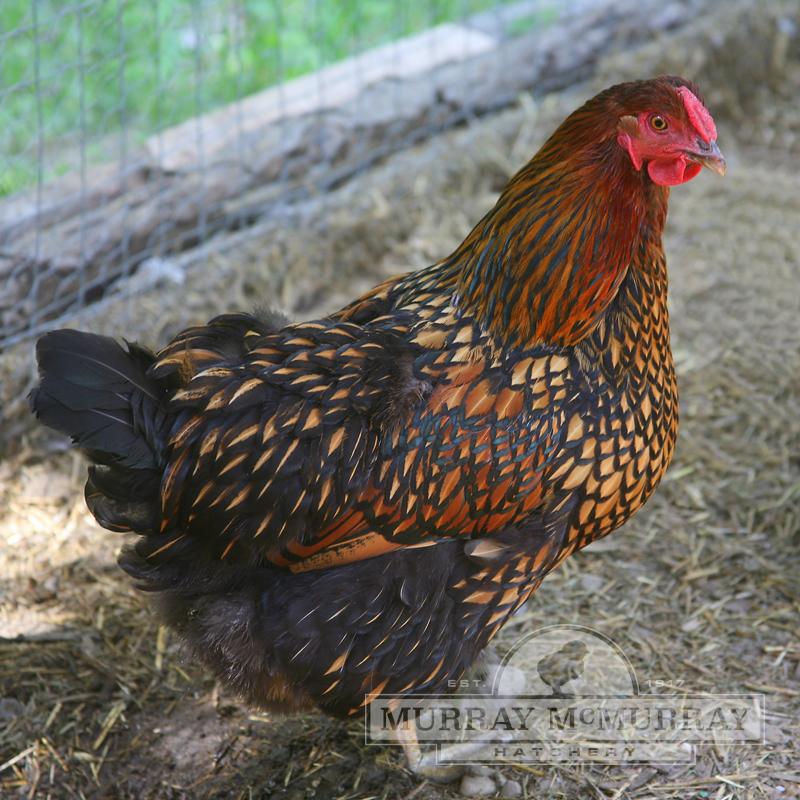

The Wyandotte (pronounced Wine-Dot and not Win-dott-ie like I wanted them to be) breed in general weighs around 6 – 7 lbs and are generally good layers averaging between 4 – 6 light brown eggs per week. The cool thing about any of the Wyandotte is their color patterns. They have a laced feather which adds in a second color of features on the tip. They are extremely cold hardy, and typically lay through the winter months as well as the summer (some breeds take a break over the cold months and put all their effort into keeping themselves warm!). They too can be broody, so we wanted just one each color as we aren’t intending to hatch chicks anytime soon! (see Dominique for a description of broodiness)
So that’s our adventure so far. These lovely baby ladies will be ready for pickup on March 26th, but we’ll have plenty to do to get ready for their arrival! Next up our coop will be arriving here in the next few days and we’re excited to share with you why we picked the coop we did and the adventure of getting that home and setup. We’ve got time though, our chicks will need to be in a heated warm environment for the first 6-8 weeks of their lives, so they likely won’t be out in their new coop until mid to late May. Our first eggs wouldn’t be expected until mid to late August! But BOY are we super excited!!